Precision structural support solution (bracket)
Date:2026-04-29
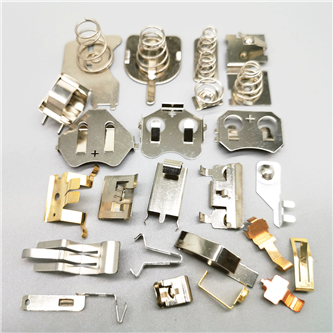
Automotive and medical precision electronic devices require not only circuit protection and electrical connections, but also high-precision, high-stability and lightweight structural brackets to support and fix core components.For high-end electronic equipment such as automotive radars, medical imaging devices and optical communication modules, a core reliability challenge lies in developing precision structures that keep the relative positions of internal components accurate and stable under vibration, shock and temperature fluctuations.
Scenario-based Solution 1: Achieve Long-term Stability of Precision Structures Under Vibration and Shock
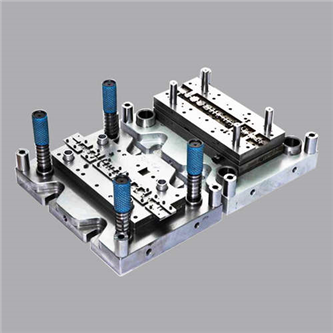
ChallengeFor automotive radars and medical imaging devices, maintain micron-level positional stability of core parts including optical elements and sensors under continuous vibration and impact.BOSI SolutionWe reasonably arrange reinforcing ribs on structurally weak areas. Supported by positioning holes and locating pins processed with high-precision dies, plus our core capability of micron-level tolerance control (positional tolerance < 0.01 mm), we ensure excellent repeat positioning accuracy for every assembly. This fundamentally eliminates instability caused by dimensional deviations.Scenario-based Solution 2: Weight Reduction Solution for Drone Brackets
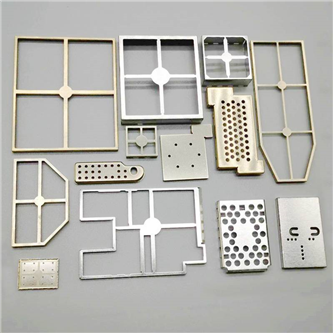
ChallengeCut down product weight while guaranteeing structural strength, rigidity and anti-vibration fatigue performance.BOSI SolutionWe adopt high-strength aluminum alloy (e.g. 7000-series aluminum) or titanium alloy, paired with hollow grid structures on non-critical load-bearing areas and monolithic design. Based on our material database, we precisely match material mechanical properties with weight reduction goals to fully leverage material performance.Relying on micron-level precision manufacturing and process control, we remove connecting accessories such as gaskets, screws and nuts. By applying high-precision stamping technology, we achieve excellent flatness and positional accuracy, and minimize assembly errors.Scenario-based Solution 3: Optimize Stability of Precision Structures
ChallengeDesign rigid structures with strong resistance to vibration and shock.BOSI SolutionReinforcing ribs are scientifically deployed on weak structural sections. Monolithic forming is adopted as much as possible to reduce connecting points like screw joints and riveted joints — these joints are usually the weak links of structural rigidity and potential loosening sources in vibrating environments.With positioning holes and locating pins made by high-precision dies and our micron-level tolerance control (positional tolerance < 0.01 mm), reliable repeat positioning accuracy is ensured for all assembly work.In our reliability laboratory, precision structures are tested under simulated harsh transportation and operating conditions. After testing, we use optical measuring equipment to recheck the positional variation of key dimensions, and all deviations are required to stay within the micron range.








 Language
 Your location:
.jpg)
 Official account
 0769-82928019
 E-mail