Many electronic engineers have encountered a puzzling issue: shielding cans are implemented per design specifications, yet bench testing yields superior performance without the shielding can fitted. What causes this anomaly, and is it related to PCB layout design for shielding cans? Let’s start with the fundamentals of shielding cans.You may first recall shielding cans from EMC compliance coursework. The three core elements of EMC are the interference source, coupling path and susceptible victim circuit, with three primary countermeasures for EMC mitigation: filtering, grounding and electromagnetic shielding, and shielding cans constitute one mainstream shielding implementation. The phrase
“When PCB space is constrained, add shielding to resolve interference” is widely quoted for high-density mobile phone PCBs, where compact layouts necessitate extensive shielding deployment. Shielding cavities for RF circuitry also derive structurally from basic shielding cans.
Core Functions of Shielding Cans
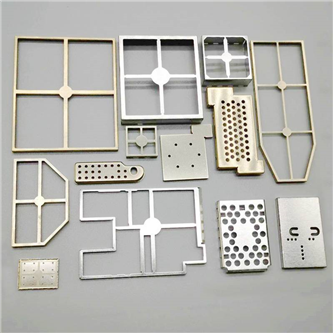
Simplified, shielding cans serve two core purposes: preventing internal electromagnetic emissions from leaking outward and blocking external ambient electromagnetic interference from intruding into enclosed circuitry. More comprehensively, a shielding can is an enclosed or semi-enclosed metallic housing that isolates internal hardware from external electric, magnetic or electromagnetic fields, while also containing the device’s internal electromagnetic radiation to avoid polluting surrounding circuits.A senior technical instructor summarizes the root causes for poorer performance with installed shielding cans, which may or may not stem from PCB design flaws, broken down into five key factors below:
1. Improper dimensional sizing of shielding cavities
Every RF PCB housed inside a shielding cavity features multiple resonant frequencies determined by the cavity’s physical dimensions alongside PCB stack-up and substrate dielectric properties. RF layout engineers must prioritize the cavity’s fundamental resonant frequency; if the operating frequency of onboard microstrip traces approaches this cutoff resonant point, signal energy gets trapped and attenuated with sharp resonant dips, disrupting normal circuit operation.Hardware engineers calculate relevant formulas, while PCB designers follow practical guidelines: optimize the cavity’s length-to-width ratio and avoid square-shaped shielding cavities wherever possible. Mounting taller components to increase internal cavity height also delivers beneficial suppression of cavity resonance.
2. Inadequate grounding or poor mechanical contact between shielding can and PCB shield fence
Loose intermittent contact between the shielding can and PCB-mounted shield fence creates an erratic open/short switching state. As a non-linear switching structure, this generates harmonics via non-linear effects. Any ungrounded metallic can acts as an unintended radiating antenna; the combined assembly of shielding can plus PCB shield fence forms a resonant cavity prone to field coupling and elevated spurious radiation. Combined with intermittent switching contact defects, spurious emissions surge drastically and risk failing EMC radiated emission standards.
3. Insufficient clearance between shielding can and onboard components
Excessively tight spacing between the shielding can and RF traces or matching components introduces unwanted parasitic capacitance that distorts characteristic impedance. This issue is especially prominent with 0402-sized discrete components due to their comparatively large physical footprint.
4. Incorrect material selection for shielding cans
High-conductivity metals including copper sheets/foil, aluminum sheets/foil and cold-rolled steel, alongside metallic plating and conductive coatings, dominate standard shielding materials:
- Copper/aluminum solid enclosures: deployed for electrostatic shielding to isolate small modules from static electric field interference;
- Ferrous alloys or beryllium-molybdenum alloys: adopted for low-frequency magnetic field shielding;
- Superconductive materials: reserved for ultra-precision electromagnetic measurement under cryogenic environments.
5. Inherently high intrinsic spurious emissions from the enclosed circuit
If the circuitry inside the shielding can generates excessive native spurious radiation, sealing the can traps internal stray energy. Confined spurious signals convert from radiated noise into conducted interference, resulting in worse conducted emission readings with the can installed versus open-top unshielded testing.
Typical Application Scenarios for Shielding Cans
Shielding cans isolate mutually interfering circuit partitions, commonly deployed for these circuit modules:
- RF & Intermediate Frequency (IF) circuits: IF signals from receiver chains interfere with RF circuitry, and high-power transmit RF signals in turn pollute IF circuits, requiring partitioned shielding;
- Local Oscillator (LO) modules: LO outputs feature high signal amplitude and strong stray radiation, requiring standalone dedicated shielding cavities;
- High-speed digital processing circuits: Fast digital pulses with steep rising/falling edges act as potent noise radiators and disrupt sensitive analog/RF circuitry;
- Cascaded amplifier chains: High cumulative gain may exceed spatial isolation between amplifier output and input terminals, satisfying oscillation criteria and triggering unwanted self-oscillation, which necessitates individual shielding separation.








 Language
 Your location:
.jpg)
 Official account
 0769-82928019
 E-mail