
Speed and passion, quality first
To accelerate innovation and safeguard qualityOur end-to-end service is a highly collaborative and seamless' highway '
Date:2021-01-20

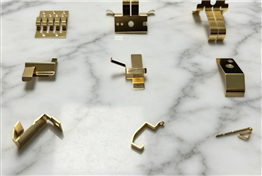
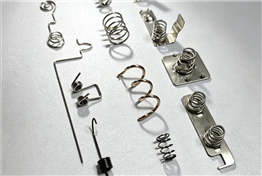
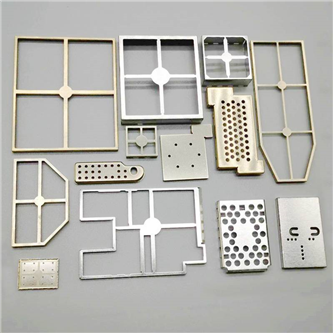
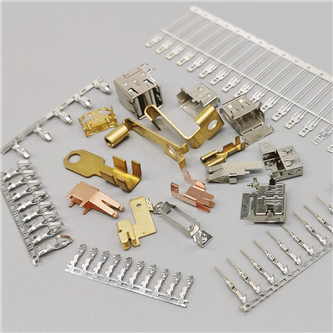
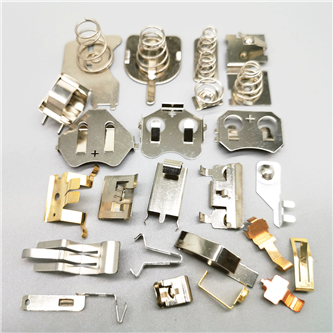
(1) Application of shrapnel
Bullets are mainly used in electronics, communication, transportation, medical, industrial, and other fields.
(2) Material of shrapnel
The main materials for shrapnel include spring steel, stainless steel, brass, phosphor copper, purple copper, beryllium copper, titanium copper alloy, etc.
Specialty of each material:
After the subdivision of spring steel, there are also different specifications and models. The overall feature is that spring steel can be heat-treated to increase product elasticity and the cost is relatively low;
Stainless steel materials also involve many different specifications and models, but when it comes to making spring plates, SUS301 and 304 are mostly chosen. The advantages of using this material are that stainless steel has certain spring plates and good wear and corrosion resistance;
If brass material has high requirements for the elasticity of the shrapnel, it is generally not recommended to use it. However, if it is only for contact shrapnel, this material is a good choice with high cost-effectiveness;
Phosphorus copper is commonly used as a contact spring for switches, sockets, etc. Phosphorus copper has many advantages, such as longer service life, higher reliability, and better conductivity than spring steel and stainless steel, and relatively higher cost.
Purple copper has high purity and looks very delicate on the surface. The main characteristics of choosing purple copper for shrapnel are high conductivity and low resistance. It is mainly used for contact shrapnel in cables, instruments, and other aspects. Therefore, if the consideration of shrapnel is conductivity rather than fatigue resistance, this material is a very good choice.
Beryllium copper is a material that can undergo aging heat treatment to increase its elasticity. If there are high testing standards for elasticity, fatigue resistance, conductivity, and stability, beryllium copper is the most reliable and safe choice. Of course, its cost is also higher than all the materials introduced earlier.
Titanium alloy is a high-end precious metal material with excellent fatigue resistance and stability. Mainly used for aviation and military products.
(3) Surface treatment of shrapnel
The surface treatment of shrapnel includes nickel plating, tin plating, silver plating, and gold plating. These four are relatively common electroplating requirements, which also means that shrapnel products involve the most. You must also want to know what to choose for plating?
Nickel plating has the lowest cost among these four types of electroplating. After electroplating, it can effectively prevent oxidation on the surface. If the appearance is the main factor and it can conduct electricity, nickel plating is the best choice.
Tin plating has excellent weldability and resistance to electromagnetic interference. Generally, tin plating is chosen for the soldering of PCB boards.
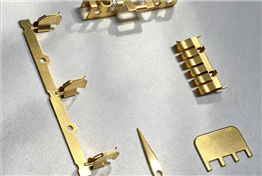
Silver plating and gold plating are both relatively expensive, and silver plating on shrapnel is mainly to increase conductivity. Gold plating is less commonly used in the electroplating requirements of shrapnel products. The main consideration for gold plating is to ensure that the shrapnel and related components can fully contact and conduct electricity, and to have high requirements for conductivity stability and oxidation resistance.







 Language
 Your location:
.jpg)
 Official account
 0769-82928019
 E-mail